“I had no proof that I had the stuff to be an artist, though I hungered to be one.”
― Patti Smith, Just Kids
I always think Patti undersold herself on this. Her way of thinking always identified her as an artist, even if she didn’t believe it. And you have to believe it.
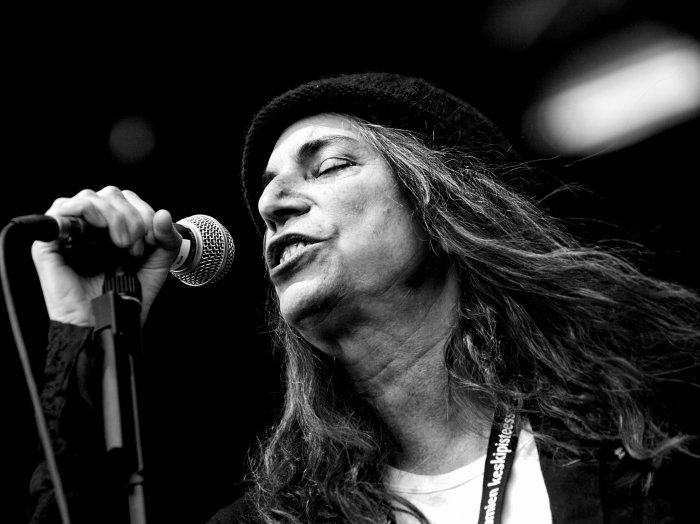
Wally Gobetz (Flickr), NYC – Chelsea: Hotel ChelseaI’ve always loved the music of Patti Smith and it was a pleasure to enjoy her books just as much. Her big hit, “Just Kids”, is a wonderful memoir of her early life. One of my favourite parts of the book is an account of a time that she and Robert Mapplethorpe (her then partner) were sitting around. I’ll let her tell it.
“We were walking toward the fountain, the epicenter of activity, when an older couple stopped and openly observed us. Robert enjoyed being noticed, and he affectionately squeezed my hand.
“Oh, take their picture,” said the woman to her bemused husband, “I think they’re artists.”
“Oh, go on,” he shrugged. “They’re just kids.”
And, of course, they were just kids but that simple classification is deceptive, because what the husband meant was “there’s nothing special about them in terms of being artists.” And that is both true and false, because there’s nothing more special about them for being just kids and there’s certainly nothing less special about them.
I like this story. The punchline, of course, is that two of New York’s better-known artists from that period were dismissed as not being interesting enough to photograph; they didn’t look artistic enough. But Patti Smith is a clever writer and the message goes beyond this.
It’s not just that she and Robert looked like two kids, it’s that you can’t always pick what an artist looks like, any more than you can tell where an artist will go based on what they’re doing when you meet them.
It’s that reminder that there are many more paths to being an artist than many people realise and that waiting for other people to recognise that won’t always happen.
Look in the mirror. That’s your audience. That’s the person who will help you identify your art. Other people may be able to help but they have to be artists too and they have to be honest, not caught up in the machinery of art or be fixated on gatekeeping. But it starts with you and you have to be prepared to observe things with an artist’s perception, revealing what others may not. It’s your perception that will drive your art.
I’ll leave you with another of my favourite quotes from Patti.
“I’m certain, as we filed down the great staircase, that I appeared the same as ever, a moping twelve years-old, all arms and legs. But secretly I knew I had been transformed, moved by the revelation that human beings create art, that to be an artist was to see what others could not.”
When you write anything that touches on the Lovecraft Mythos (Cthulhu being among the most famous members), you are working with a large, collaborative work that has its basis in the mind of Howard Phillips Lovecraft. Sadly, once you dig around in the that mind, you quickly run across his racist beliefs, which many have written of before. We think differently now about both casual and calculated racism, no matter how influential the author. Evidence of this is in the recent (and good) news that Lovecraft’s image is no longer a trophy that non-white people may hesitate to receive after winning one of the most prestigious writing awards for fantasy.
“A statuette of this racist man’s head is in my home. A statuette of this racist man’s head is one of my greatest honours as a writer.”
World Fantasy award winner Nnedi Okorafor, 2011.
No-one should have to receive a portrait or image of someone who despised or belittled them or their people at what should be a high point of their lives. We should not rely upon the oppressed and downtrodden to take time to carefully and delicately explain to us why we are doing something wrong, when even a modicum of thought says that some things of the past must be left in the past, if we are to find a better future. Learn and grow. Improve and be better, together.
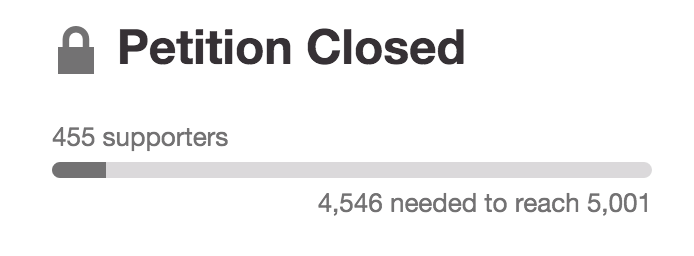
This is how many people voted to keep the Lovecraft bust Fantasy award as it was on a change.org poll. The request to change it garnered 2,668 votes. That’s a pretty clear desire for change. (I note that the change request was to make it Octavia Butler but I believe the final decision was to avoid making it a person.)
Racism is stupid. Race, as many understand it, doesn’t even exist in a measurable way and the dividing of humanity based purely on appearance is nonsensical. But Lovecraft wrote of giant monsters, unspeakable ancient gods, that were utterly indifferent to the humans that they terrorised and crushed. He set a frame where all of humanity could be seen in the role of victim, a natural container for unity rather than division, and then he placed stereotype representation and paranoia in the mix, focused on a subset of the humans. He used structures and terms that could not have been much more offensive in their construction. As Moore notes, Lovecraft’s fears of the erosion of his own position may have been the basis of much of the horror he would have found in his work. The brute, the other, the thing that isn’t white… all of these are the horrors that, in his mind, would overtake his world.
But how small a view to take through any lens. You are scared of the dark and thus you must blame … that man over there, because he looks a little different. How puerile.
My opinion is that Lovecraft, privately and publicly racist, missed the point of his own work. The monsters he conjured up do not need a stereotypical African-American or a villainous Asian figure to ground their terror. Corruption happens to people, not to all members of a loosely defined racial group. If anything, the sheer scale of what was projected as our enemy was so vast that all earthly issues faded into nothingness. Why would you care what the skin colour was of the person fighting beside you, if you were fighting together?
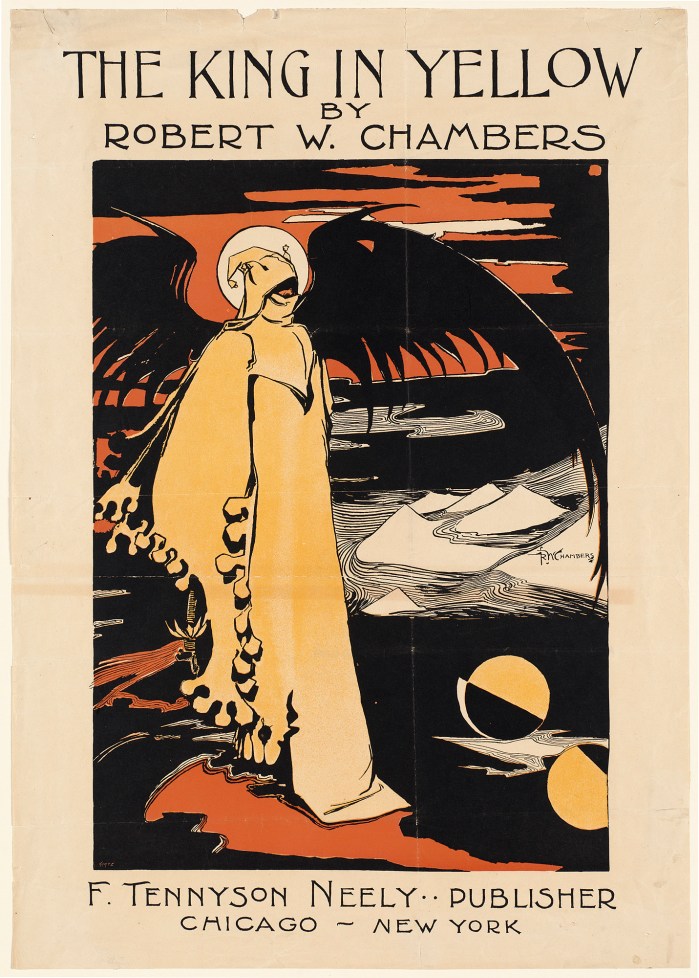
The same monsters I have employed in the narrative engine of my own work, inherited from Lovecraft and his collaborators and Chamber’s progenitive “King in Yellow”, are terrible and deeply inhuman. Set against the rise of the Nazis, I did not feel that I could meddle too deeply with known history because, sadly, we know that it took the emergence of the full fascist Nazi state and their march across Europe to galvanise opposition. But monsters, rising in the shadow of the Great War? They could unite and provide an opponent that any sane human being should oppose. Note the italics.
Ah, I mentioned the King in Yellow. And thus he comes…
Thus, I have taken the path of reducing certain references in my work, despite knowing the terms that would have been used in a derogatory fashion. This is deliberate. There are early drafts with 1930s language, giving the villains the ability to appear more villainous. But I thought more on this, in the context of Lovecraft, and decided to remove them. There are references to corrupted humans in my work but I have tried to frame these as individuals who are following a path into darkness and, after their involvement with dark forces, have become something that is not human. It takes an anti-human mindset to unite with such innately destructive forces.
No, this is not realistic. But neither are giant monsters threatening London and the world, even if they are largely composed of allegory. If we can suspend disbelief for magic and Byakhees, then we can tolerate people being a bit less offensive and small-minded unless it is crucial to the plot. And, for this work, I didn’t feel that it was necessary. As noted in the Moore references above, sometimes a story revolves around the racism to frame the reaction of characters. This is, I believe, not such a work.
In summary, I do not condone or even really understand Lovecraft’s racism, given the frame in which he stated it. He put humans into a nigh-unwinnable war with an uncaring Universe and yet still focused on such petty quibbles as what someone looks like or the shape of their lips?
That’s farcically bathetic.
When we put it simply, we seem to all agree that we are one people and, in the face of a terrible enemy, we should face it together. I am always surprised that Lovecraft could construct such a terrible enemy and miss such an obvious point.
I’ve had a number of people ask what they can do to support what I’m doing.
I immediately answer “buy about a million copies” but I think I know what they’re asking. I assume that a number of them will buy (and I hope read) the book but I suspect they’re asking what I expect of them and if I want them to do anything other than read it.
Let’s get expectations out of the way. I don’t expect anyone to buy the book just to do me a favour. I’d love it if people bought it because they’d like to read it but I’m not going to break into people’s iPads or Kindles to see if they have a copy. One of the great things about an eBook is that it can never physically be on a shelf. All your friends may have bought it or none may have and you’d never know by looking!
I also don’t expect people who do read it to do anything other than read it. If they like it and want to tell other people, that’s great but it’s not expected. If people want to write reviews then, whether they’re good or bad, that’s their choice. An honest review is an honest review. You can’t publish and not leave yourself open to that.
I won’t be putting up any reviews of my own. I don’t have the time or the inclination to set up enough sock-puppets and my usernames are predictably dull: velourfuture and nickfalkner.
What do I want? All I want from the people who wish to support me is for them to raise a toast with me when we launch the book and then whatever happens, happens.
Toast may vary by location, age, and inclination of user. May still involve yeast. Warning: this kind of toast is not a liquid. Do not drink this toast.
This is not going to make me rich or famous but it will make me happy. People who support me in this are wonderful and there’s nothing else needed.
I’ve had some questions that nibble around the edges of the “who is publishing you” biscuit. I thought I’d take a moment to address this specifically.
NIBBLE THE PUBLISHING BISCUIT!
I’m self-publishing this novel for a range of reasons but, yes, it’s self-published. However, let me be the first to say that this means that you now know less about the process that the book has gone through. For a trad publishing gig, the book has had to make it past several layers of readers and, once accepted, it has been edited, re-read many times, adjusted and tweaked at the structural and syntactic level. As someone who has read self-pub (and trad…) that has obviously not gone through that process, I understand some concerns here. I recognise the importance of objective criticism, other views, and good editing. I wanted to make sure that this work went through a production process that would lead to a really good final book.
What has happened to this book? Let me tell you
The original idea was developed in early 2015 and the work was researched, planned and written over a period of about nine months. I then revised it, fixed some of the more obvious problems, and sent this second draft to readers. I’m lucky that I can write a reasonable first draft and I’m usually happy for D2 to go out as a reflection of what I was thinking.
Those readers gave me early feedback, based on their own broad reading experience and knowledge as writers. I made some modifications and then gave the next draft to two people who were readers in this genre to see what they thought, from a more commercial perspective.
When I received feedback that one of them had spent three hours on a plane reading it on the tiny screen of an iPhone because he was enjoying it, I took that as a positive.
Overall, reader reception across five different readers was overwhelmingly positive, with valuable critical feedback. This was my (self-created) quality gate to move to the next stage.
We then moved to a detailed editing and restructuring mode. The opening chapter changed. The ending changed. Three times. Entire sections of text disappeared. New characters appeared. Swathes of names shifted for effect. Individual words were tweaked to change the rhythms of a critical sentence.
Darlings were killed.
I decided it was good enough to publish but that, to be fair to readers, I should use a professional editor to carry out the structural skim and deep copy edit to make sure that we’d done a good job in the early stages. I also hired a professional designer and artist to design and construct the cover. Both of these people are part of my local art and writing community and the money I pay them goes straight back into making my own city a more literate and beautiful place.
This is still my vision. This will be my book. But it has gone through multiple readings, a lot of editing, and, by the time it reaches you, it will have been scrutinised by professional eyes to make sure that the $2.99 you spent was worth it.
That’s my process. The book is an exciting action adventure where my characters fight bravely against the forces of darkness. I’ve been told it’s a page-turner and that makes me very happy. The structure of the book will be good enough to support that, because that’s how I built the process.
I can only hope, as release date starts to creep closer, that all of the love and care shows.
Just because I’m selling a book for bus fare doesn’t mean that I can give you a bad ride.
Yes, I know, I’m launching my first novel on April Fool’s Day. But why not?
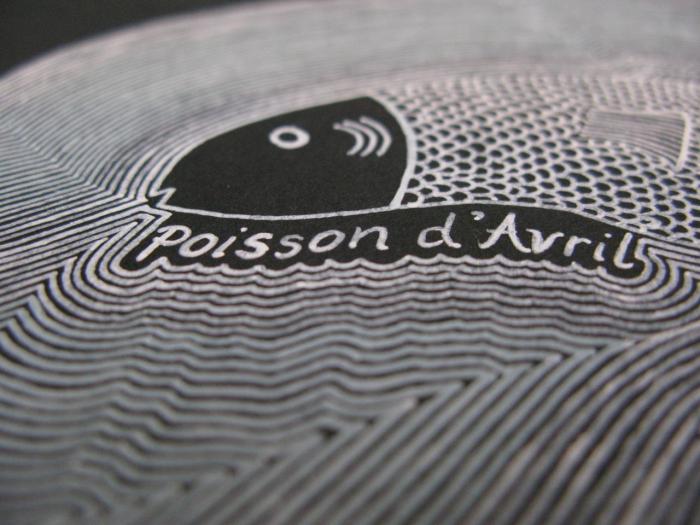
Lovely WIP Lino “Poisson d’Avril” by Helen Harrop (flickr)
If you’re in Adelaide on April the 1st, from 6:30 to 9pm, why not register on EventBrite and come and see an invisible book being launched in the electronic space!
I’m trying to come up with a set of easy mistake catchers that will do a lot of the more mindless editorial work for me. Having stared at the same 100,000 words for about six months, I’m losing the ability to see the errors. Here is another short set of Scrivener Regular Expression (regex) patterns that will find easy-to-fix problems. (Look at yesterday’s post on #regex to get more information on the definitions I’m using here. As a note, \w means word characters, ^ means ‘start of the line’ and [ ] is used to allow a range of characters to match. I’ll add some more as I go.)
\w”
This is looking for a single “word” character, followed by closing quotation marks. Scrivener usually replaces straight quotes with opening and closing quotation marks. It’s important to use the right one but you can look for both by modifying the pattern to \w[“”].
This should catch every time you’ve written speech and missed the punctuation at the end.
^[““][a-z]
You have to switch on case-sensitivity in the search to get this one to work but it will start at the beginning of lines (^) and look for opening or straight quotes that are followed by lower-case letters.
This will catch sentences such as “the fish sang.” and “dang it all to heck, man!” but it will also pick up any deliberate use of the lower case, such as “iBooks is a distribution platform.”
\w,[””]$
Now we have a word character (A-Z, a-z, 0-9, and _) followed by a comma. After this, we’re looking for closing quotes. But what about the $? That means “this has to be at the end of a line”. It’s the companion to ^.
This will show us any time that we used a comma as the final punctuation inside quotation marks and then started a new line.
This will find
“This is a terrible thing,”
but it won’t find
“This is a terrible thing,” said Charlie, “What are we to do?”
because the ,” isn’t at the end of a line.
\s\d\s
This will find any digits that are sitting around by themselves. If you, like me, would prefer to write most of your numbers as words but keep forgetting to do it, this pattern is for you!
\d means any digit from 0-9. The spaces are around it to stop the pattern matching digits that are part of bigger numbers. (\d by itself would match the 1, the 9, the 3 and the 2 in 1932 but as individual matches.)
This will find patterns such “He said that there were 3 beasts”.
Want to find longer numbers? \s\d{2}\s will find all numbers that are two digits long and are surrounded by spaces.
Want to find all numbers between 1 and 4 digits long? \s\d{1,4}\s is the pattern and will find numbers that are 1, 2, 3, or 4 digits long.
(\w)(\w)(\w)\3\2\1
This one is just for fun. It finds palindrome patterns that are six characters long. In my text, “sniffing” and “suffused” are matches.
Adding a space character in the middle give us (\w)(\w)(\w) \3\2\1 and this will match “sword dropped” and “now wonder”.
Really rather useless unless you have a habit of writing palindromic text and wish to stop.
I’ve still got some details to sort out but it appears that things will be together by April the 1st. If you’re in Adelaide, there will be a book launch (location to be advised) and I’ll have an on-line update as well. I’m hoping to have a pre-order option where it’s available but more details as we get closer.
I’m pushing myself to meet this date to bring everything together but, given that I have no physical distribution to worry about, it may shift. Keep your fingers crossed that my tax administration details are all sorted soon!
I ran several other Scrivener checks today, once again using the amazingly handy Regular Expression (RegEx) facility to find patterns on things.
Oh, comma, why you so pushy?
Punctuation is easy to mess up, especially where spaces are involved and I find some of the following patterns very handy. Remember that to do this in Scrivener, you will need to go to the global search the project field, set the Operator to RegEx and then you’ll be in the right mode. Here are some handy patterns, with explanation.
^\s+\w
This pattern will find any sentence that has spaces before you start using words. The ^ means start at the beginning of the line. The \s+ means you are looking for 1 or more spaces (\s means space, + means ‘at least one or more’). \w represents a word character, from a-z, A-Z, 0-9, including the _ (underscore) character. This will catch lines such as (ignoring the quotation marks, here used for clarity) ” Bosco said…” and ” Bosco said…”, which can be very hard to pick up from visual inspection.
\w,\w
This will pick up word characters that are tightly packed around a comma. If you are prone to writing “very,very high” then this will find that for you. (Sometimes this is a legitimate pattern! 100,000 is valid but will be detected by this.)
\w\s+,\w
This is very similar to the above but now it picks up when you have the space in the wrong place. This will find “very ,very high”.
\s+(\w+)\s+(\1)\s
This one is more complicated! I’ve mentioned it before but this is an optimised version. Remember that \s means “a space character” although formally it means any whitespace character including tab, space, carriage return or new line. Adding + means that \s+ will match ” ” and ” ” and ” newline tabcharacter “. \w+ means that we are now looking at words of at least one character in length.
But what does ( and ) mean? This is a grouping operator and, because we’ve used it, anything that matches this now has a numerical reference. We call this a capturing group because we’ve ‘captured’ that pattern and numbered it! We can refer to this capturing group (our first) with the shorthand \1.
Now we can explain the whole pattern. Starting with any number of spaces (but at least one), we look for characters that make up words, stopping when we find a space. Remember this captured group of characters is labelled as \1. By using \1 again, we are saying that we want to find all the situations where we have the same pattern of characters twice in a row, separated by spaces. Once we match that first group of characters, the regex system can then build a pattern where that group is repeated. The magic of regex!
This pattern will find ” of of “, ” it IT”, ” and and ” and also things like ” R R ” if you’re spelling something out.
If you simplify it to (\w+)\s+(\1), you’ll find all of those patterns plus things like “he heard” (where the he he is actually located), “pithy thyme” (thy thy) or “puny NYC” (ny ny pattern will be found here unless you use the search option ‘case sensitive’).
[ ]{2}
There’s a single space between [ and ]. The {2} means that you are looking for exactly two of these in a row. This will find every time that you typed ” ” instead of ” “. (Some of you like to double space. Many of us do not.)
Had a great meeting this morning with an editor, looking at making those final tweaks to the work. My great bunch of critics, supporters and very detailed readers have done an enormous amount but I’ve decided to ask a professional to look at this, really to confirm how close this is and to get those little tweaks that make it great. Well, good. 🙂
Welcome to my nightmare. (Flickr photo by Nic McPhee.)
You only get one first novel and, after much thought, I’ve decided that a light structural and copy edit is not going to break my brain, loosen my grip on my work, or cause Babylon to fall. Again. I have a direct connection to the editor and I’m supporting locals while keeping control. I’m still very happy with this version of the Indie process.
I want you to have something good to read. This will help.
After a great coffee meeting, the editor likes the concept and her interests are bang in the middle of the genre I’m writing. I think this will lead to a good outcome.
Not much longer, dear readers! You get to read the final version of this is about 6-8 weeks, assuming that I get the business details and launch issues sorted in time.






 Nick Falkner, Personal Projects